

 Views:65
 Keywords:
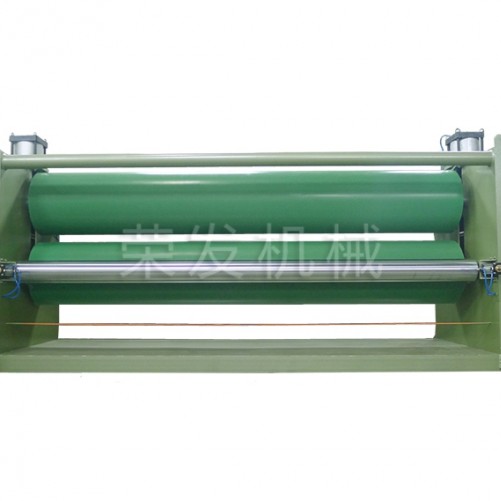
To minimize downtime caused by equipment failure during daily operation, proper maintenance and care of the hot press are essential; this ensures consistent operating speeds and product quality. Below, Rongfa Hot Press Manufacturer outlines how to maintain the equipment.
1. Steam Elbow Seal Rings: Many hot presses use a sealing mechanism involving asbestos packing for the steam pipe swivel joints. Asbestos cord impregnated with PTFE (Teflon) is compressed within the existing stuffing box to prevent steam leaks caused by the hardening of standard asbestos packing at high temperatures; while effective, this method is somewhat inconvenient to use. When replacing the seal ring, the ring behind the spherical joint must be cut at a 45-degree angle to fit it over the pipe, though this does not compromise the sealing performance.
2. Hot Press Platen Maintenance: The upper and lower caul plates (liners) protect the surfaces of the hot press platens. The upper caul plate, in particular, directly affects the surface quality of the fiberboard. Debris—such as fibers—often gets trapped between the caul plate and the platen, so the caul plates should be removed periodically for cleaning. The upper caul plate is typically replaced weekly to allow for surface grinding and to ensure the quality of the finished board surface.
3. Installing Caul Plates: A fiberboard sheet must be placed as a cushion before applying pressure. Damaged or irregularly sized mats must not be fed into the hot press, and pressing fiberboard directly without caul plates is prohibited. If the hot press is to be shut down for an extended period, steam condensate must be drained from the platens to prevent internal rusting.
4. Uneven Heating: If parts (or all) of the hot press platen fail to heat up, it indicates a blockage or a "short circuit" within the internal channels. A specialized deep-hole drilling machine is required to open and inspect the channels; operation may only resume after the obstruction is cleared.
5. Repairing Steam Leaks: If a steam leak is detected in a section of the platen, it can be repaired via electric welding and then ground smooth. After welding, a hydrostatic pressure test should be conducted at 1.2 to 1.4 times the operating steam pressure. If the leak is caused by severe internal corrosion, the platen should be replaced.
(Some materials on this website are sourced from the internet. If any information displayed here infringes upon your copyright or other legal rights, please notify us promptly, and we will remove the content immediately.)